
Below are descriptions of some of the most promising technological areas we have identified to date, as well as a selection of research papers on related subjects:
Global Energy Situation and Assessment:
Thomas E. Bearden, LTC, U.S. Army (Retired), 2007. Rapid and Decisive Solution of the World Energy Crisis and Global Warming
Thomas E. Bearden, LTC, U.S. Army (Retired), 2009. Important Assessment of the Present Energy Crisis presented in a letter (June 7, 2009) to the Director of ARPA-E (Advanced Energy Projects Agency – Energy). Posted with Permission of the author.
John Deutch, James R. Schlesinger and David G. Victor, 2006. Council on Foreign Relations report: “National security consequences of oil dependency”
Steven M. Greer, M.D., 2004. Going Tactical
Steven M. Greer, M.D., 2007. New Energy Solutions And Implications For The National Security And The Environment
Richard Heinburg, 2007. What will we eat when the oil runs out?
Theodore C. Loder III, PhD, 2001. Briefing Papers Prepared For The U.S. Senate Environment and Public Works Committee on “Outside-the-Box” Technologies
John Petersen, contributor to SeekingAlpha.com. Death of the Electric Car: Li-ion Batteries Too Valuable for Plug-In Vehicles
Gary Vesperman, 2009. Suppressed Energy Technologies. A shorter summary is also available.
Selected Scientific Papers on Energy Technologies:
Thomas E. Bearden, LTC, U.S. Army (Retired), 2000. The Unnecessary Energy Crisis: How to Solve it Quickly
Thomas E. Bearden, LTC, U.S. Army (Retired), 2009. Precursor Engineering and the Falsification of Modern Physics
Thomas E. Bearden, LTC, U.S. Army (Retired), Solving the World Energy Crisis – Info and References.
Kowsky-Frost, Quartz Crystals Charged by High Frequency Current Lose their Weight – article on the Kowsky-Frost Quartz levitation experiment reprinted from the September, 1927 issue of Science and Invention. The original article from the German publication Radio-Umschau is also available.
J. Beene, 1999. Solar power – Electric generator & refrigeration unit -Technical Description.
Anthony Griffin, 1993. Water as Fuel. Extract of a lecture given by Admiral Sir Anthony Griffin at a UK symposium on the Impact of New Technology on the Marine Industries.
Paul A. LaViolette, Ph.D., 2000. Moving Beyond the First Law and Advanced Field Propulsion Technologies
Theodore C. Loder, III, Ph.D., 2002. “Outside the box” Space and Terrestrial Transportation and Energy Technologies for the 21st Century. Invited paper presented at AIAA by Professor Loder, Institute for the Study of Earth, Oceans and Space, University of New Hampshire.
Theodore C. Loder III, Ph.D, 2003. Implications of Outside-the-Box Technologies on Future Space Exploration and Colonization Presented February 5, 2003 at the Space Technology and Applications International Forum.
Stanley A. Meyer, 1995. Water Fuel Cell – Technical Brief.
Robey, J.A. 2006. Water Car – How to turn water into hydrogen fuel. Book available from: Kentucky Water Fuel Museum, Box 55558, Lexington, KY 40555 (www.waterfuelmuseum.org).
Example of Books on Energy Technologies
 TO
TO
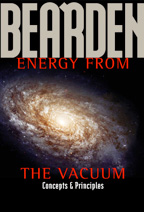
Bearden, Thomas. 2002. Energy from the Vacuum – Concepts and Principles. Cheniere Press. Santa Barbara, CA. 952 pp.
Bedini, John and Thomas Bearden. 2006. Free Energy Generation – Circuits and Schematics. Cheniere Press. Santa Barbara, CA. 182 pp.
King, Moray. 2001. Quest for Zero-Point Energy. Paraclete Publishing, Provo, UT. 215 pp.
LaViolette, Paul. 2008. Secrets of Antigravity Propulsion: Tesla, UFO’s and Classified Aerospace Technology (3th ed.). Bear & Co., Rochester, VT. 512 pp.
Manning, Jeane. 1996. The Coming Energy Revolution, The search for Free Energy. Avery Publishing Group. Garden City Park, NY. 230 pp.
Manning, Jeane and Joel Garbon. 2009. Breakthrough Power – How quantum-leap new energy inventions can transform our world.
Valone, Thomas. (ed.), 1994. Electrogravitics Systems: Reports on a new propulsion methodology. Integrity Research Institute, Washington, DC 2005. 120 pp.
Valone, Thomas. 2005. Electro Gravitics II: Validating reports on a new propulsion methodology (2nd ed.). Integrity Research Institute, Washington, DC 20005. 159 pp.
Valone, Thomas. 2007. Zero Point Energy – The Fuel of the Future. Integrity Research Institute, Beltsville, MD. 228 pp.
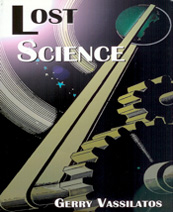
Vassilatos, Gerry. 1999. Lost Science. Adventures Unlimited Press. Kempton, IL. 347 pp.